What to Buy in the Third Trimester When Nothing Fits Anymore
Quick Answer: With a few weeks left, buy only what solves a daily problem and what you will still wear postpartum: two pairs of over-bump leggings, one or two stretchy dresses, a nursing-compatible bra, and one layer that fits over everything. Skip structured maternity workwear, anything in a seasonal print, and anything you would not wear at eight weeks postpartum.
The cost-per-wear maths in the last six weeks is brutal, which makes postpartum usefulness the deciding criterion for almost every purchase.

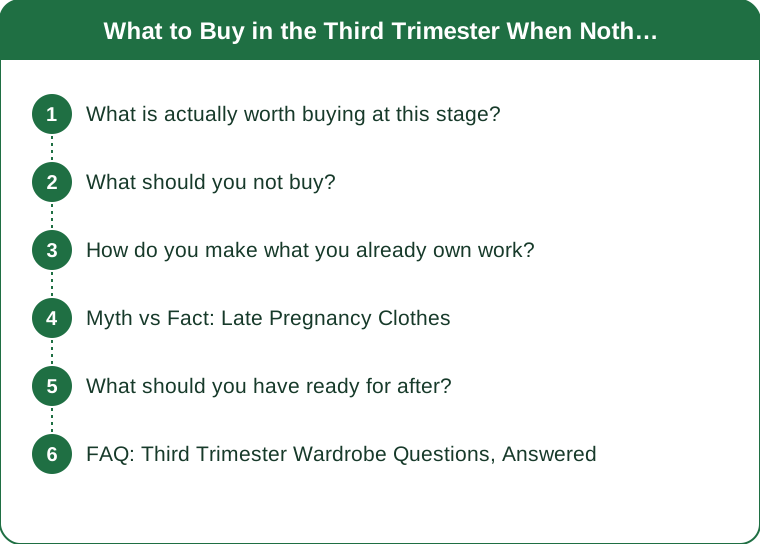
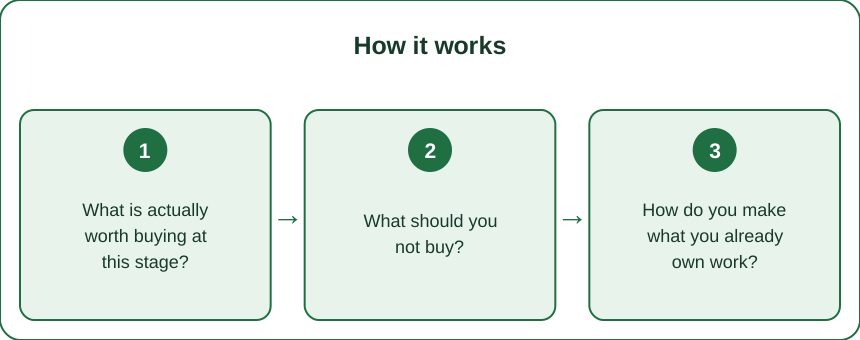
What is actually worth buying at this stage?
Five categories, and the test for each is whether you will still wear it in November.
1. Two pairs of over-bump leggings. The most-worn item of the last trimester by a wide margin. Over-bump rather than under-bump - under-bump waistbands roll down constantly once the bump is large. Buy black, buy thick enough to be opaque, and buy two so one can be in the wash. These carry straight into postpartum, where they will be the main thing you wear for two months.
2. One or two stretchy dresses. A jersey or ribbed midi dress with enough stretch works now and works postpartum, and it removes the entire question of what goes with what. A wrap or button-front version doubles as nursing-friendly.
3. A properly fitted bra. Rib cage and cup size both change late, and an ill-fitting bra is a genuine daily discomfort. If you plan to breastfeed, a nursing bra bought now in a soft, flexible style covers both periods. Get measured rather than guessing - most people are in the wrong size by this point.
4. One layer that fits over everything. A long cardigan, an oversized shirt, or a coat you can actually close. Most coats do not close over a third-trimester bump, and buying a maternity coat for six weeks is poor value - an oversized non-maternity coat in a larger size works now and later.
5. Comfortable shoes you can put on without bending. Slip-ons. This sounds minor and it becomes the most appreciated item on the list in the final month, when reaching your own feet is genuinely difficult and swelling has changed your size.
What should you not buy?
Four categories that generate the most regret.
Structured maternity workwear, if you are within a few weeks of leave. A tailored maternity blazer or dress trousers worn eight times is one of the worst cost-per-wear items available, and it has no postpartum life.
Anything in a distinctive print or a seasonal colour. You will wear it a handful of times and it will be memorable in every photograph. Neutrals get worn more and photograph better across a period where you are being photographed a lot.
A full postpartum wardrobe, bought now. Your body at six weeks postpartum is not predictable in advance - ribcage, hips, and feet all commonly change, sometimes permanently. Buying a size or a shape in advance is a guess. Wait until you are in it.
Anything requiring effort to put on. Buttons, zips, structured waistbands, anything overhead that is tight. In the last month and the first weeks after, the deciding factor for what you wear is how easy it is to get into.
And the honest one about nursing clothes: specialised nursing tops are a mixed purchase. Some people use them constantly and many find that a stretchy scoop neck or a button-front shirt works just as well at a fraction of the cost. Buy one and see before buying five - this is the most common over-purchase in this whole category.
How do you make what you already own work?
Four adaptations that cost nothing and extend the wardrobe you have.
Your partner’s or a larger shirt. Oversized button-front shirts work over leggings, work as a layer, and work for nursing later. This is free and it is genuinely one of the most-worn items for a lot of people in the last month.
A hair elastic through the buttonhole on trousers you can nearly fasten. An old trick and it buys a few more weeks from trousers that would otherwise be retired. A proper belly band does the same thing more comfortably and costs very little.
Anything already oversized. Oversized knits, tunics, and long cardigans mostly still work. Go through what you own before buying - most wardrobes contain three or four pieces that still fit and have been mentally written off.
Longer tops with a bump. The most common fit problem late on is that regular tops ride up at the front as the bump grows, leaving an exposed strip. A longer top length is the fix, and side-ruched maternity tops are designed specifically for it.
The one thing not to try to adapt: bras. A too-small band or cup is a genuine daily discomfort and there is no workaround. This is the item worth spending on.
On borrowing: maternity clothes are the single most borrowable category of clothing there is, because they are worn briefly and stay in good condition. Ask before buying. Most people who have recently been pregnant have a box they are keen to pass on, and the same box tends to circulate through several people.

Myth vs Fact: Late Pregnancy Clothes
Myth: You need a full maternity wardrobe. Fact: Most people wear the same five or six items repeatedly in the last trimester. Buying breadth rather than a few things that work well is the most common overspend.
Myth: You will be back in your normal clothes soon after birth. Fact: Most people are in maternity or stretchy clothes for at least several weeks postpartum, and often longer. The uterus takes around six weeks to return toward its pre-pregnancy size, and the rest varies enormously. Planning for a longer transition avoids an unpleasant surprise in week two.
Myth: Buy maternity in your usual size. Fact: Maternity sizing is generally designed around your pre-pregnancy size, so your usual size is the right starting point for most brands. What changes is the cut, not the number - though bra sizing is a genuine exception and needs measuring.
Myth: Under-bump is more comfortable than over-bump. Fact: Under-bump can be more comfortable early in the third trimester and tends to roll down as the bump grows. Most people end up preferring over-bump by the final weeks.
Myth: You should not buy anything second-hand. Fact: Maternity clothes are worn for a few months and are frequently in near-new condition. It is one of the best second-hand categories there is, and buying new for six weeks of wear is difficult to justify.
What should you have ready for after?
A short list, prepared now, because it is not a good time to shop later.
For the hospital or birth centre: a dark, loose, comfortable outfit to leave in - roughly what fit at around six months pregnant, since the bump does not disappear immediately and a lot of people are surprised by this. A robe, slip-on shoes, and comfortable underwear you do not mind ruining.
For the first two weeks at home:
- Two or three pairs of the same over-bump leggings you have been wearing
- Loose tops with easy front access if breastfeeding
- A soft, unstructured bra with no underwire
- Something warm to layer, because you will be sitting still for long stretches
What people consistently say they wish they had: more of the small number of things they actually wore, rather than a variety. Three identical comfortable outfits is a better plan than nine different ones, because laundry becomes irregular and you will reach for the same thing every time.
On buying postpartum clothes in advance: get the basics that are size-tolerant - leggings, oversized tops, a soft bra - and wait on anything fitted. Ribcage width, hip width, and shoe size all commonly change, some of it permanently, and buying fitted items in advance is a guess against a body you have not met yet.
The one genuinely worthwhile late purchase: whatever makes you feel like yourself. Six weeks of feeling uncomfortable in everything you own has a real cost, and one item that fits well and looks like you is worth more than three practical ones. That is not a styling argument - it is the thing most people report mattering most in retrospect.
FAQ: Third Trimester Wardrobe Questions, Answered
How many maternity items do I actually need for the last trimester?
Most people wear five or six pieces repeatedly. Two pairs of leggings, two tops, one dress, and one layer covers the majority of days.
Should I buy nursing clothes before the birth?
One or two items, not a wardrobe. Many people find button-front shirts and stretchy scoop necks work as well as specialised nursing tops, and you cannot tell which camp you are in until you are feeding.
What size maternity clothes should I buy?
Generally your pre-pregnancy size, since maternity cuts are designed around that. Bras are the exception and should be measured, because both band and cup change late.
Is it worth buying a maternity coat?
Usually not for six weeks. An oversized non-maternity coat a size or two up works now and afterward, and costs less.
How long will I need maternity clothes after birth?
Commonly several weeks at minimum, often longer. Plan for a gradual transition rather than a return to pre-pregnancy clothes in the first month.
TL;DR:
- Buy only what solves a daily problem and survives into postpartum
- Two pairs of over-bump leggings, one or two stretchy dresses, a fitted soft bra, one layer, slip-on shoes
- Skip structured workwear, seasonal prints, and a postpartum wardrobe bought in advance
- Borrow before buying - maternity is the most borrowable category there is
- Buy three of the thing you actually wear rather than nine different things
Cost per wear in the last six weeks is unforgiving. Ask whether you will still be wearing it in November, and if the answer is no, borrow it instead.
See It in Motion
Seen here: High Waist Yoga Leggings with Inner Pocket — shop it on bubblelime.com
Keep Reading
This article is for general informational and styling purposes only. Fit, sizing, and product availability may vary.