The Bra Problem Nobody Warns You About in Pregnancy
Quick Answer: Two separate things change and they change on different timelines. Cup size increases early, often in the first trimester, driven by hormonal breast tissue growth. Band size increases later, mainly in the second and third trimesters, as the ribcage expands to accommodate the growing uterus - typically by one to two band sizes. Buy in stages rather than all at once: soft, wire-free, and adjustable at 10 to 14 weeks, then reassess around 24 to 28 weeks. Anything bought before 20 weeks is likely to need replacing.
Nobody mentions the ribcage part. People expect the cup change and are entirely blindsided when a bra that fit last month feels like it is being tightened by someone standing behind them.

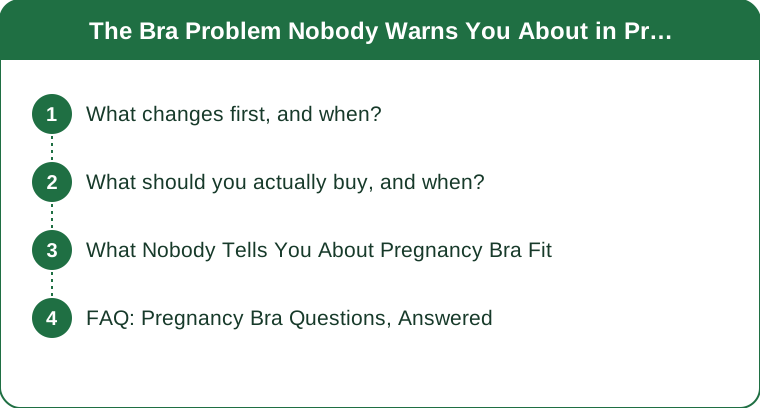
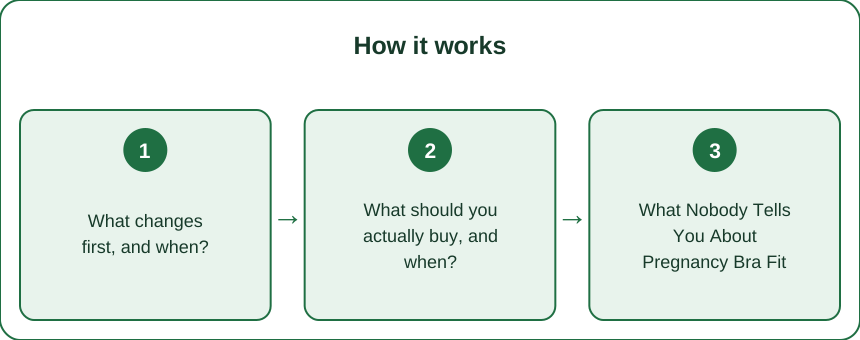
What changes first, and when?
Weeks 4 to 12 - the cup change. Breast tenderness and growth are among the earliest pregnancy signs. Increased blood flow and glandular development can add a cup size or more in the first trimester alone, sometimes before anything else is visible. Tenderness is often the more urgent problem than size at this stage, which is why soft and unstructured wins early.
Weeks 12 to 24 - the quiet stretch. Cup growth usually slows. The band starts creeping. Most people can get through this period on the same bras with a band extender.
Weeks 24 to 36 - the band change. The ribcage expands outward and upward to make room, and the lower ribs flare. This is where a band size or two appears, and it is the change nobody prepares for. It arrives as a feeling of constriction rather than of anything being too small.
Weeks 36 to 40 - and afterwards. Some further change, and then a substantial shift again when milk comes in around days two to five postpartum, followed by another settling over the following weeks.
The practical implication: there is no single size that carries you through. Planning for three fittings, roughly at 12, 26, and 36 weeks, saves money over buying an entire set at any one of those points.
What should you actually buy, and when?
First purchase, roughly 10 to 14 weeks:
- Wire-free and soft, because tenderness dominates and wires sit on tissue that is actively changing
- Wide, flat band for support without pressure
- Adjustable straps with real range
- Stretch cup fabric that accommodates growth rather than fitting exactly
- Buy two, not six
Second purchase, roughly 24 to 28 weeks:
- Reassess band size properly - this is where the surprise is
- Four hooks rather than two, for pressure distribution across a larger ribcage
- Consider nursing bras now if you plan to feed, since a well-fitting nursing bra can serve the last trimester and the early weeks. Buy in the size you are at 36 weeks, not before.
- Sleep bras become genuinely useful here for many people
Third stage, 36 weeks onward:
- Two nursing bras maximum before the birth. Size changes again when milk comes in, and buying a full set beforehand is the most common wasted expense.
Throughout: band extenders are three or four for the price of a coffee and can extend the life of bras you already own by weeks. This is the highest-return purchase on the list.

What Nobody Tells You About Pregnancy Bra Fit
The band should sit level and firm, not tight. As the ribcage expands, a band that stays where it was becomes genuinely restrictive - and a restrictive band under an expanded ribcage contributes to the rib pain and breathlessness many people report in the third trimester. If you are noticing your breathing feels shallow, check the band before assuming it is the baby.
Underwire is not banned, but it is fussy. The guidance is not that wires are dangerous; it is that a wire fitted to a changing shape will sit on tissue rather than on the ribcage, and that causes pain and pressure. If you wear wires, they need to be re-fitted more often - which for most people is more trouble than switching to well-constructed wire-free.
Sleep bras are underrated. Many people find breast tenderness and the weight change disrupt sleep from the second trimester on. A soft, light sleep bra is a small purchase with a disproportionate effect on comfort at night.
Your rib flare may not fully reverse. Ribcage expansion often partially persists after birth, and some people permanently sit one band size larger. This is normal and worth knowing before you keep an entire pre-pregnancy drawer waiting.
Straps carry more load as the pregnancy progresses. Wider straps distribute better, and if straps are digging, the band has usually stopped doing its share of the work - not the strap’s fault.
Sports bras need re-sizing too, and sooner. Higher support requirement plus a changing shape means a pre-pregnancy sports bra usually becomes uncomfortable before an everyday one does.
FAQ: Pregnancy Bra Questions, Answered
How many bras do I actually need?
Two per stage is enough for most people, with a third if you exercise. Buying more is the main way people overspend, because each stage lasts a couple of months and then the size moves again.
When should I buy nursing bras?
Around 36 weeks, in the size you are then. Milk coming in adds size temporarily, and most nursing bras are designed with stretch to accommodate that. Buying at 20 weeks means buying for a body two sizes ago.
Can I keep wearing my normal bras with an extender?
Often yes, through the middle of pregnancy, provided the cup still fits and the band sits level. An extender addresses the band and does nothing for the cup, so check both. It is a genuinely good way to delay a purchase.
Do I need to be professionally fitted?
It helps, especially at the 26 to 28 week point where the band change catches people out. If that is not accessible, the two checks that matter most are: the band sits level all the way round and you can slip two fingers under it with mild resistance, and the cup contains everything without spilling or gaping.
What if my two sides have changed differently?
Common, and often more pronounced during pregnancy. Fit to the larger side and use the strap adjustment on the other, the same as at any other time.
This is general information, not medical advice. New breast pain that is localised, one-sided, or comes with redness or fever should be checked by your provider.
TL;DR:
- Cup changes early (first trimester, hormonal), band changes later (second and third, ribcage expansion of one to two sizes).
- Buy in three stages - around 12, 26, and 36 weeks - rather than one set at the start.
- Soft, wire-free, wide band, four hooks, adjustable straps. Two per stage is plenty.
- Band extenders are the cheapest thing on this list and extend the bras you own by weeks.
- Buy nursing bras at 36 weeks, not before - size shifts again when milk comes in.
- A too-tight band contributes to rib pain and shallow breathing in the third trimester. Check it before blaming the bump.
The ribcage part is the one nobody mentions, and it is the one that makes a perfectly good bra feel wrong overnight. Knowing it is coming turns it from a mystery into a scheduled purchase.
See It in Motion
Seen here: Maternity Capris with Side Pockets — shop it on bubblelime.com
Keep Reading
This article is for general informational and styling purposes only. Fit, sizing, and product availability may vary.