The Maternity Work Shoe Problem Nobody Prepares You For
Quick Answer: Pregnancy commonly causes real, sometimes permanent foot size and width changes due to hormonal ligament loosening and fluid retention, which means your existing work shoes may simply stop fitting well regardless of how professional or comfortable they used to be — prioritizing width and swelling room over sticking with old favorites solves most of the problem.
Maternity style advice covers dresses and workwear extensively but rarely mentions that your feet themselves are changing shape — which means the shoe half of a work outfit often needs its own separate plan.

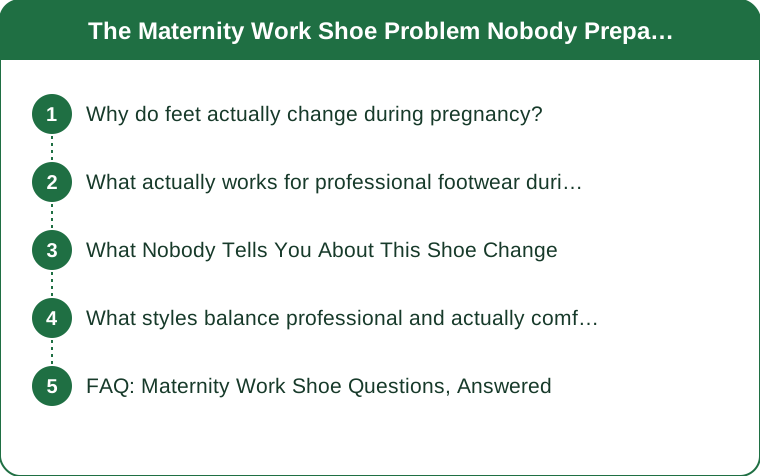
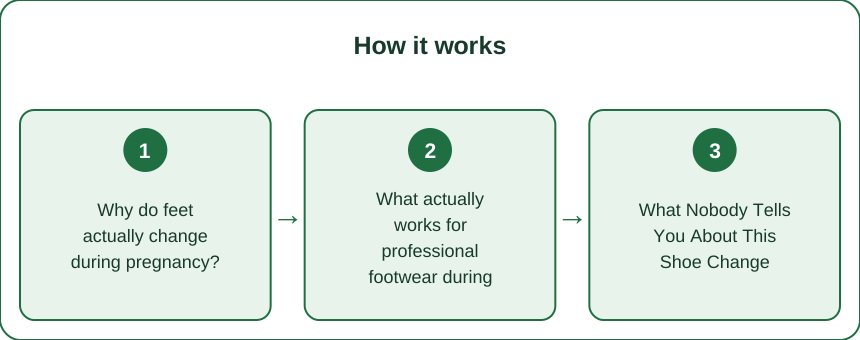
Why do feet actually change during pregnancy?
Relaxin, a hormone that increases during pregnancy to loosen ligaments in preparation for delivery, doesn’t only affect the pelvis — it loosens ligaments throughout the body, including the ones supporting your foot’s arch, which can cause measurable, sometimes lasting increases in foot length and width.
Separately, normal pregnancy fluid retention adds swelling, particularly later in the day and later in pregnancy, which is a temporary but very real fit issue on top of the structural ligament changes.
What actually works for professional footwear during this shift?
Prioritize adjustable, expandable options — shoes with laces, straps, or stretch panels accommodate daily swelling fluctuation far better than a fixed, structured shoe that fit perfectly in the morning and pinches by 3pm.
A slightly larger, wider size than your pre-pregnancy standard is often necessary and worth buying rather than forcing your usual size — sizing up specifically for this season is a reasonable, temporary wardrobe investment, not overreacting.

What Nobody Tells You About This Shoe Change
For a meaningful number of people, the size and width change doesn’t fully reverse after delivery — some permanent structural change to arch and foot width is genuinely common, which means “waiting until after the baby” to address shoe fit isn’t always the resolution people expect.
This is worth knowing upfront mainly so buying maternity-appropriate shoes doesn’t feel like a wasted, temporary purchase — treating it as a genuine wardrobe update, not a stopgap, sets more realistic expectations.
What styles balance professional and actually comfortable?
Low block heels or wedges offer more stability than thin heels (a genuine balance concern as pregnancy progresses shifts your center of gravity) while still reading as professional in most office settings.
A clean loafer or structured flat with some room built into the toe box handles most business-casual settings comfortably, and a well-made ankle boot with a low, stable heel works for cooler-weather professional settings without sacrificing support.
FAQ: Maternity Work Shoe Questions, Answered
When during pregnancy do foot size changes usually start?
It varies significantly, but many notice changes becoming apparent in the second trimester, often worsening somewhat in the third as swelling increases — it’s rarely sudden, more a gradual shift worth monitoring rather than a single dramatic change.
Should I buy several new pairs or just one transitional pair?
One or two versatile, adjustable pairs usually covers most work situations through pregnancy — this doesn’t need to be a full shoe wardrobe overhaul, just enough options that fit comfortably as your feet change.
Is foot swelling during pregnancy always normal, or a warning sign?
Mild swelling, especially later in the day, is common and generally normal, but sudden or severe swelling, especially with other symptoms, warrants a call to your provider rather than assuming it’s routine. This is general information, not medical advice.
TL;DR:
- Relaxin hormone loosens foot ligaments, genuinely changing foot size and width during pregnancy
- Fluid retention adds daily swelling variation on top of that structural change
- Prioritize adjustable, expandable shoes and be willing to size up temporarily
- The change doesn’t always fully reverse postpartum — treat new shoes as a real investment, not a stopgap
Your usual work shoes aren’t failing you — your feet are genuinely different for a while, and the shoe plan needs to catch up. This is general information, not medical advice.
See It in Motion
Seen here: Maternity Capris with Side Pockets — shop it on bubblelime.com
Keep Reading
This article is for general informational and styling purposes only. Fit, sizing, and product availability may vary.