The Maternity Wardrobe for September, When Nothing Fits the Weather Either
Quick Answer: Transitional maternity dressing is harder because the standard fix - layering - adds bulk exactly where there already is some, and body shape is changing faster than the season. The pieces that work are those that adjust: open front layers rather than pullovers, one stretch-waist bottom in a heavier fabric, and a longer base layer that keeps the bump covered when you raise your arms.
September is difficult for everyone and more so when your size is changing week to week. Buying for a whole season is the mistake; buying pieces that adjust is what actually works.

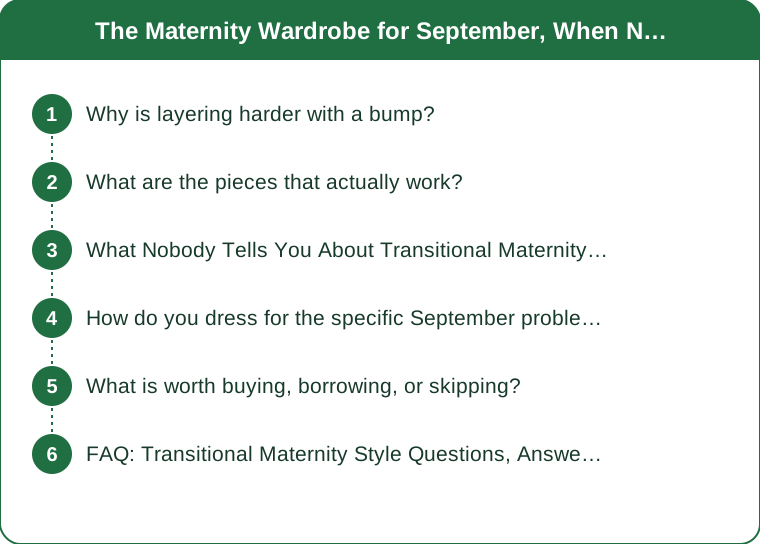
Why is layering harder with a bump?
Three structural reasons, and knowing them makes the solutions obvious.
Layers add volume where there is already volume. Standard layering advice - fitted under loose - assumes the torso is the narrow part. With a bump, an oversized outer layer over a bump adds width to the widest point, which is why the usual advice produces a result most people are unhappy with.
Pullover layers are the specific problem. A jumper worn over a bump has to accommodate the bump across its full width, which means it is loose everywhere else. Open-front layers solve this completely because they frame rather than cover.
Length becomes the recurring failure. A top that fits at the start of a month rides up by the end of it. In summer this is a minor issue; in autumn a gap between top and waistband at the widest point is both cold and annoying.
Temperature regulation is genuinely different in pregnancy. Many people find they run warmer, which means the layering has to work in the other direction more often than expected - the mid-layer comes off earlier and stays off longer.
What follows from all this: open fronts over pullovers, longer lengths than usual, and fewer layers of better-chosen pieces.
What are the pieces that actually work?
1. An open-front layer, in two weights.
A long cardigan, a duster coat, or a kimono-style jacket. This is the single most useful transitional maternity piece because it accommodates any size change, adds warmth without adding width across the bump, and creates vertical lines either side.
One fine weight for warm days, one heavier for cold mornings. These two pieces do more work than anything else in the wardrobe.
2. A long base layer.
A fitted long-sleeve or ribbed top that is genuinely long - long enough to stay tucked under the bump when you raise your arms. Maternity-specific tops are cut for this; standard tops usually are not, and the difference shows within a few weeks.
Ribbed fabric is particularly good here because it stretches without losing shape.
3. One good stretch-waist bottom in a heavier fabric.
Over-bump or under-bump depending on preference and stage, in ponte, heavy jersey, or a maternity jean. One that fits properly beats three that nearly do. Heavier fabric holds shape considerably better and reads more seasonal.
4. A dress that works with layers.
A jersey or ribbed midi dress worn with the open-front layer, tights, and boots. It requires no waistband decisions, it accommodates change, and it is one decision in the morning rather than four.
5. A scarf.
Unfashionable advice and genuinely the most efficient warmth-per-bulk item available. It also visually breaks up the vertical line of an outfit, which many people find they prefer.
What Nobody Tells You About Transitional Maternity Dressing
Your feet may change size. Swelling is common, particularly later in pregnancy and in warmer weather, and some people find shoe size changes permanently. Do not buy autumn boots in your usual size early in pregnancy. Buy when you need them, and buy something with adjustability - a wider fit, a zip, or an adjustable strap.
Buying a whole seasonal wardrobe is the most common expensive mistake. Your size is changing on a schedule that does not match the season. Buying a few adjustable pieces and adding as needed costs considerably less than a September wardrobe that does not fit by November.
Non-maternity pieces in larger sizes are frequently a false economy. They are cut for a different shape, so a size up is wide everywhere rather than shaped for a bump - which reads oversized rather than fitting. The exceptions are open-front layers and stretchy dresses, where cut matters less.
Renting and secondhand are unusually well-suited to maternity. Items are worn for a few months and are frequently in excellent condition. Autumn is a particularly good time to look, as people clear summer maternity items.
You may be warmer than everyone around you. Increased blood volume and metabolic rate mean many pregnant people run warmer, which makes an overheated indoor space genuinely uncomfortable. Plan for taking layers off more than for putting them on.
Bras change more than once. Rib cage expansion and breast changes both occur, and a fitting in the second trimester will likely not be right in the third. Getting refitted rather than persevering makes a real difference to daily comfort.

How do you dress for the specific September problems?
The cold morning, warm afternoon problem.
Base layer that works alone, open-front mid layer, and something for the journey. The open front means you can adjust continuously rather than committing.
The overheated indoor space.
This is often the harder one in pregnancy. The base layer needs to be genuinely comfortable alone in a warm room - which means a proper top, not a thin vest that assumes something over it.
Wind.
An open-front layer is warm and not windproof. For a windy day, something that closes - a wrap coat, a belted cardigan, or a jacket that fastens above and below the bump - is what actually works. A coat that no longer fastens is a common September discovery.
Rain.
Most maternity coats do not accommodate a late-stage bump. A large umbrella, or a non-maternity waterproof in a much larger size worn open, is usually more practical than buying a maternity raincoat for a few weeks.
Standing for long periods.
More uncomfortable in pregnancy, and shoes matter more than any other item. Supportive, closed, and easy to get on without bending is the brief. This gets more important, not less, as the pregnancy progresses.
The general principle for September: two or three adjustable pieces used repeatedly, rather than many pieces used once. It is cheaper, it is easier in the morning, and it works better.
What is worth buying, borrowing, or skipping?
Worth buying new:
- Bras, fitted properly, and refitted as things change. This affects daily comfort more than anything else
- One bottom that fits well in a heavier fabric
- Shoes, bought when you need them rather than in advance
Worth buying secondhand or renting:
- Coats and jackets, which are worn for a short window and hold up well
- Dresses for specific occasions
- Anything for the final weeks, where the wearing period is short
Worth borrowing:
- Almost anything, from anyone who has recently been pregnant. Maternity clothes are among the most-lent items in existence and most people are pleased to see them used
Worth skipping:
- A full maternity wardrobe bought at once. Buy as you need
- Maternity versions of things that do not need to be maternity - open cardigans, scarves, most outerwear worn open, and many stretchy dresses all work in your usual size
- Anything for a stage you are not at yet. Predicting what will fit in two months is unreliable
What to look at first in your own wardrobe: open-front cardigans and jackets, stretchy midi dresses, and anything with an elasticated or wrap waist. Most people already own more transitional-capable pieces than they realise, and a proper look before shopping usually reduces the list considerably.
One genuinely useful purchase for the transitional weeks: a belly band, which extends the life of pre-pregnancy trousers by several weeks and costs very little.
FAQ: Transitional Maternity Style Questions, Answered
How many maternity pieces do I actually need?
Fewer than the shops suggest. Two bottoms, three or four tops, two open-front layers, and one or two dresses covers most people’s daily needs, supplemented from an existing wardrobe.
Should I buy maternity coats?
Often not worth it for one season. A non-maternity coat in a larger size worn open, plus a scarf, works for many people. If you are in a genuinely cold climate for the third trimester, it may be worth it.
Will my shoe size change permanently?
It does for some people and not others. Swelling during pregnancy is common; whether it results in a lasting change varies. It is a reason not to buy shoes in advance.
What’s the most useful single piece?
A long open-front cardigan in a medium weight. It works at every stage, over everything, and does not need to be maternity-specific.
How do I stop layers looking bulky over a bump?
Open fronts rather than pullovers, and fitted rather than oversized underneath. The vertical lines of an open layer are what keep the outfit from reading wide.
TL;DR:
- Open-front layers over pullovers - they accommodate any size and add warmth without width across the bump
- One well-fitting stretch-waist bottom in a heavier fabric beats three that nearly fit
- Base layers need to be genuinely long, and genuinely wearable alone in an overheated room
- Do not buy autumn boots in advance - feet often change, and adjustable styles are worth prioritising
- Buy a few adjustable pieces as needed rather than a season’s wardrobe at once
Borrow, rent, and buy secondhand where you can. Maternity clothes are worn briefly and are usually in excellent condition.
See It in Motion
Seen here: Maternity Capris with Side Pockets — shop it on bubblelime.com
Keep Reading
This article is for general informational and styling purposes only. Fit, sizing, and product availability may vary.