What Actually Photographs Well on a Bump (and What Does Not)
Quick Answer: Fitted fabrics that follow the bump photograph better than loose ones, because volume reads as bulk rather than shape on camera. Choose solid mid-tone colours over patterns, fabrics with drape and weight over stiff ones, and one clear silhouette rather than several competing layers. Bring two or three options rather than ten, and prioritise how it moves over how it looks standing still.
Maternity photographs are one of the few times most people are photographed deliberately, and the outfit decisions that work are noticeably different from what works in daily life.
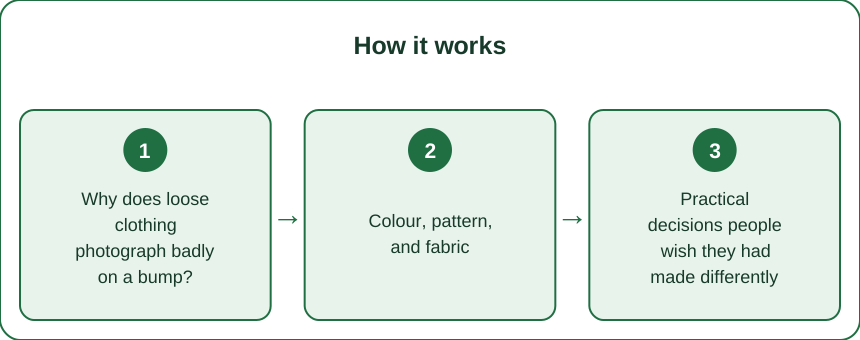
Why does loose clothing photograph badly on a bump?
Because a camera flattens three dimensions into two, and volume without shape reads as bulk.
In person, a floaty oversized dress reads as relaxed and comfortable, and your eye understands the shape underneath from movement and depth perception.
In a photograph, the same dress becomes a large area of fabric with no defined form. The bump - the actual subject - disappears into it. The most common regret after a maternity shoot is choosing something loose because it felt comfortable, and finding that the photos do not show a pregnancy at all.
What works instead:
- Fitted through the bump, with fullness elsewhere. A bodycon dress, a ribbed knit, or a stretch jersey that follows the shape.
- Fitted with an open layer over it - a fitted underdress with a flowing kimono, cardigan, or open shirt. This gives you shape and movement at once, which is the most reliable combination.
- A defined empire waist, sitting just under the bust, which creates a clear line above the bump
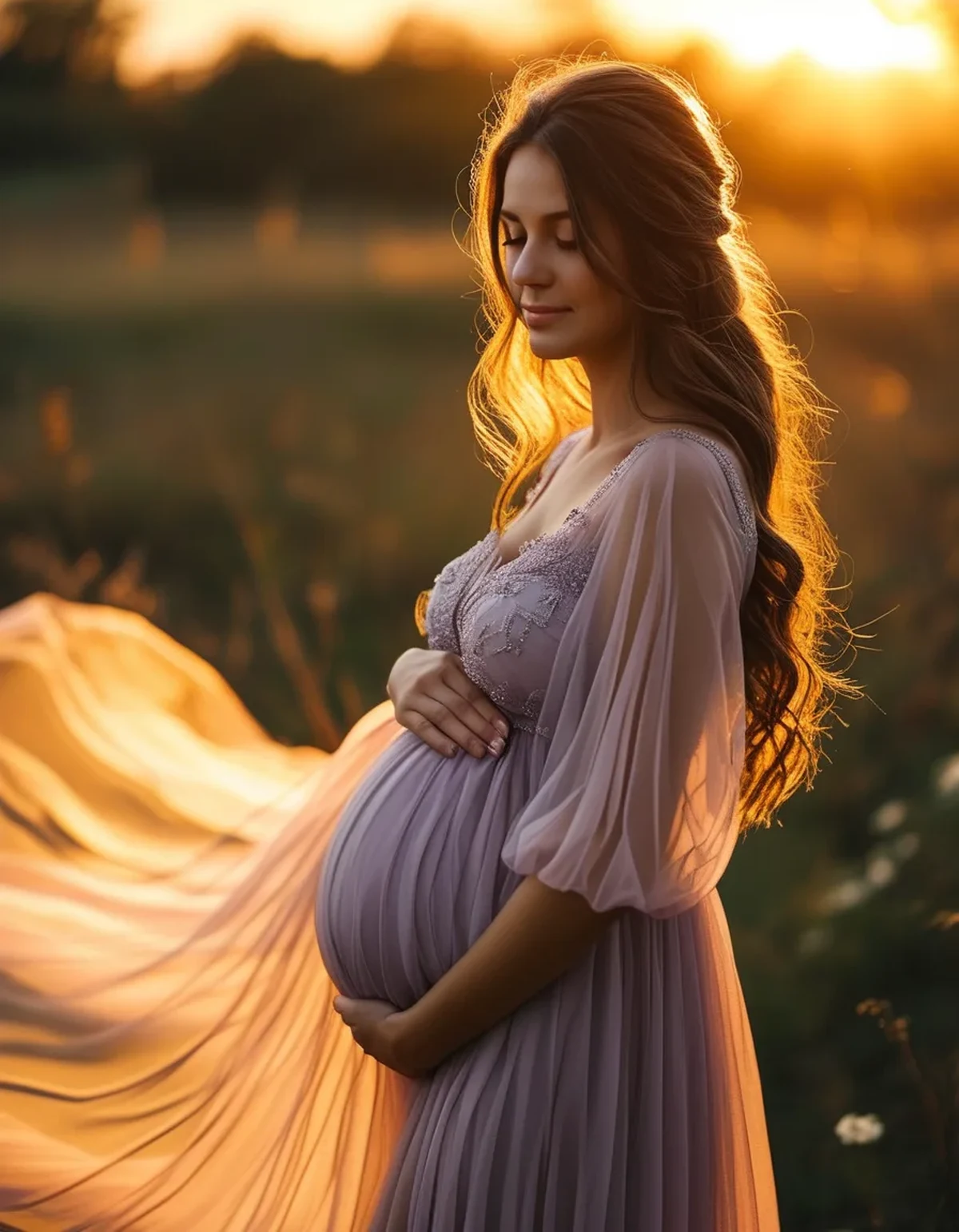
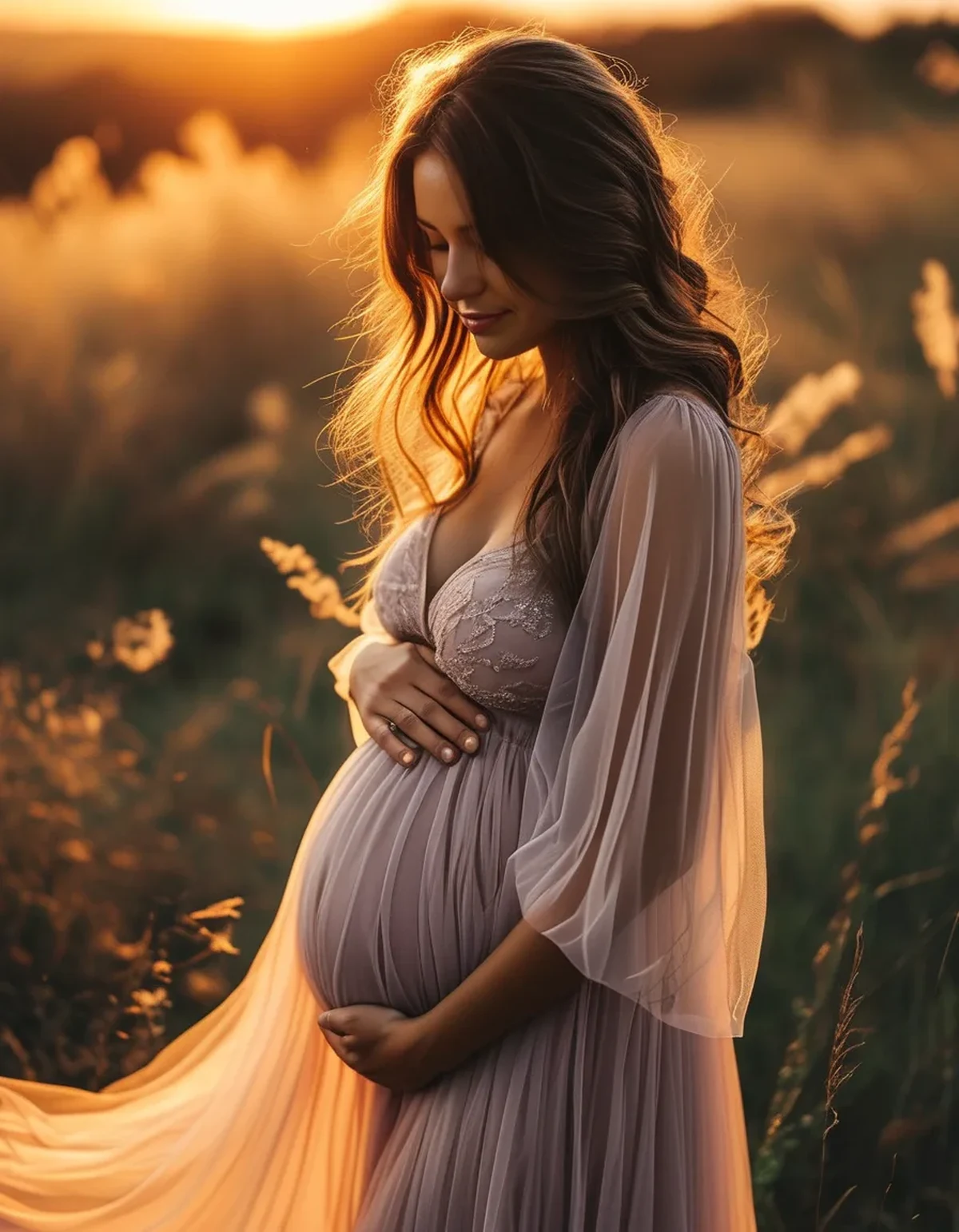
The specific exception where loose works: long, heavy fabric that falls in a genuine column and moves - a proper flowing gown in a heavy jersey or silk, with wind or motion. The movement is what makes it work, and it needs weight to move well. A light floaty fabric on a still day just hangs.
A useful test: take a photo of yourself in the outfit, standing normally, from a few metres away. If you cannot clearly see the bump in the photo, the camera will not see it either.
Colour, pattern, and fabric
Colour:
- Solid colours over patterns, almost always. Patterns compete with the subject, date the photograph, and can produce moire on camera.
- Mid-tones photograph best - dusty pink, sage, terracotta, navy, cream, rust. They hold detail where black loses it and white blows out.
- Neutral and muted tones age better. A photograph you will look at in twenty years is better served by something quiet.
- Black: slimming in person, and it loses all fabric detail in a photograph and can merge with shadows. Deep jewel tones do the same job with far more detail retained.
- White and cream: beautiful in bright natural light, and they blow out in strong sun and need careful exposure. Good in shade and at golden hour.
Consider the location. A green dress in a woodland disappears; a rust dress in autumn leaves does the same. Contrast with the background is what makes the subject read, and it is the single most common oversight.
Fabric:
- Jersey and stretch knits - follow the shape, comfortable, forgiving. The most reliable choice.
- Ribbed knits - the vertical lines follow the curve and photograph beautifully
- Silk, satin, and heavy crepe - drape well, catch light, move properly
- Chiffon and light georgette - only in movement. Still, they crumple and read as thin.
- Stiff cotton and linen - they crease within minutes of sitting and hold every fold
- Anything that wrinkles is a problem, because you will sit down between shots
Texture adds interest to a solid colour - a ribbed knit, a subtle pleat, a soft velvet. This is how you avoid flat and plain while staying out of pattern territory.
Practical decisions people wish they had made differently
Bring two or three outfits, not ten. More options means more time changing and less time shooting, and decision fatigue produces worse choices. Two considered outfits plus one you love is the right number.
Fit the clothes to the week of the shoot, not to when you bought them. Bumps change fast in the third trimester. A dress that fitted at 32 weeks may not at 36, and the shoot is usually booked well in advance. Try everything on the week before.
Check it from behind and from the side. Maternity photos are largely side-profile, which is the angle nobody checks in a mirror. Ask someone to photograph you from the side before the day.
Underwear decides more than the dress does. Visible lines are the most common fixable problem in maternity photos.
- Seamless everything, in a colour close to your skin
- A supportive bra that fits now, since bust size changes considerably
- Nothing with elastic that digs, which leaves marks for an hour after removal - take off tight waistbands and socks well before, not on arrival
Shoes are usually invisible or barefoot in outdoor shoots. Comfortable shoes to walk in, and something for the photos if feet are in frame. Swelling is real in late pregnancy and a shoe that fitted last month may not.
Timing within the pregnancy: 28 to 34 weeks is the commonly recommended window - a clearly defined bump, and generally before the heaviest discomfort and swelling. Earlier if you are expecting twins.
Timing within the day: golden hour, the hour after sunrise or before sunset, for outdoor shoots. Soft, warm, directional light that flatters everything. Midday sun is the worst light of the day and produces harsh shadows under the eyes.
What Nobody Tells You About Maternity Shoots
Your hands are the hardest part and nobody warns you. Hands resting on the bump is the classic pose and it is easy to do badly - claw hands, tense fingers, both hands in the same position. Relax the fingers, keep them soft, and vary the position - one hand above and one below, one on the bump and one at your side, hands linked underneath.
Movement produces better photographs than posing. Walking, turning, adjusting your hair, laughing at something. Static poses look static, and the frames photographers usually keep are the ones between the poses.
Partners and children need planning too. Coordinate rather than match - the same colour family in different tones, not identical outfits. Small children have a working window of about twenty minutes, so shoot those frames first.
The weather changes what works. Wind is a friend to flowing fabric and an enemy to hair and to structured outfits. Cold makes everyone tense, which shows in shoulders and jaw. A warm layer between shots is worth more than an extra outfit.
You will be photographed from below more than you expect, because photographers shoot low to emphasise the bump. Check your outfit from a low angle - necklines and hems behave differently from there.
Skin and hair are worth minimal effort, not none. Heavy makeup photographs as heavier than it looks. A slightly stronger version of your everyday look is the standard advice, with attention to under-eye and any redness. Do not try a new treatment, new fake tan, or a new hairstyle in the week before - the risk of a reaction or a result you dislike is not worth it, and skin is often more reactive in pregnancy.
Do the shoot even if you do not feel like it. The most common feedback from people who nearly cancelled is that they are glad they did not. Feeling unphotogenic in late pregnancy is close to universal, and it does not show up in the photographs the way it feels.
FAQ: Maternity Photoshoot Questions, Answered
When should I book the shoot?
28 to 34 weeks for a single pregnancy, earlier for twins. The bump is clearly defined and most people are still comfortable enough to enjoy it.
Should I buy a special dress?
Not necessarily - a fitted jersey dress you already own often photographs better than a rented gown. Renting is a good middle option for a flowing gown you will wear once. Whatever you choose, try it on the week of the shoot.
What colours photograph best?
Solid mid-tones - dusty pink, sage, terracotta, navy, cream. Avoid busy patterns, and think about contrast with the location so you do not blend into the background.
Should my partner and children match?
Coordinate rather than match. The same colour family in different tones and textures. Identical outfits date quickly and draw attention away from the subject.
What if I do not feel good about how I look?
Nearly everyone feels this way in late pregnancy, and it does not translate into the photographs. Choose an outfit that is comfortable and fitted through the bump, book golden hour, and let the photographer direct - the frames you will keep are usually the candid ones.
TL;DR:
- Fitted through the bump photographs better than loose, which reads as bulk on camera
- Solid mid-tone colours, fabric with drape and weight, and one clear silhouette
- Contrast with the location, or the outfit disappears into the background
- Seamless underwear, and remove anything with tight elastic well before the shoot
- 28 to 34 weeks, golden hour, two or three outfits, and try everything on that week
The single most useful thing you can do is take a photograph of yourself in each option from the side, from a few metres away. It answers almost every question above in about five minutes, and it is the angle you never see in a mirror.
See It in Motion
Seen here: Maternity Capris with Side Pockets — shop it on bubblelime.com
Keep Reading
This article is for general informational and styling purposes only. Fit, sizing, and product availability may vary.