Maternity Layering When Your Bump Is Cold and the Rest of You Is Overheating
Quick Answer: Pregnancy commonly raises body temperature and increases blood volume, which means many people run hot even in cold weather while still feeling cold in their hands, feet, and across the bump. The solution is layers that open rather than layers that come off - an open cardigan, a wrap coat, a scarf - plus warm extremities. A single heavy coat is the wrong tool because you cannot regulate it.
The standard advice to add layers assumes you get cold all over. In pregnancy, you frequently do not.
Why does temperature regulation change in pregnancy?
Increased blood volume, a higher metabolic rate, and hormonal changes all push in the same direction.
Blood volume increases substantially during pregnancy, and more blood flowing near the skin means more heat carried to the surface. The practical result is that many people feel warmer than usual, particularly in the second and third trimesters.
Metabolic rate rises too, which generates additional heat. Combined with carrying extra weight, ordinary activity produces more warmth than it used to.
But the distribution is uneven, which is what makes dressing difficult. Hands and feet often still feel cold, and the skin over the bump can feel cool even while you are overheating overall. Circulatory changes and simple surface area explain some of this.
The result is a genuinely awkward combination: too warm indoors, cold extremities outdoors, and a strong dislike of anything restrictive around the middle.
The design implication: you need fine-grained control, not more insulation. Layers that open give you a dozen settings; a heavy coat gives you two.
What should the layers actually be?
Openable, adjustable, and warm where you are actually cold.
Base layer: thin and breathable. A fitted maternity top in cotton, bamboo, or fine merino. Merino is worth the money here because it regulates temperature in both directions and resists odour, which matters when you are running warmer than usual.
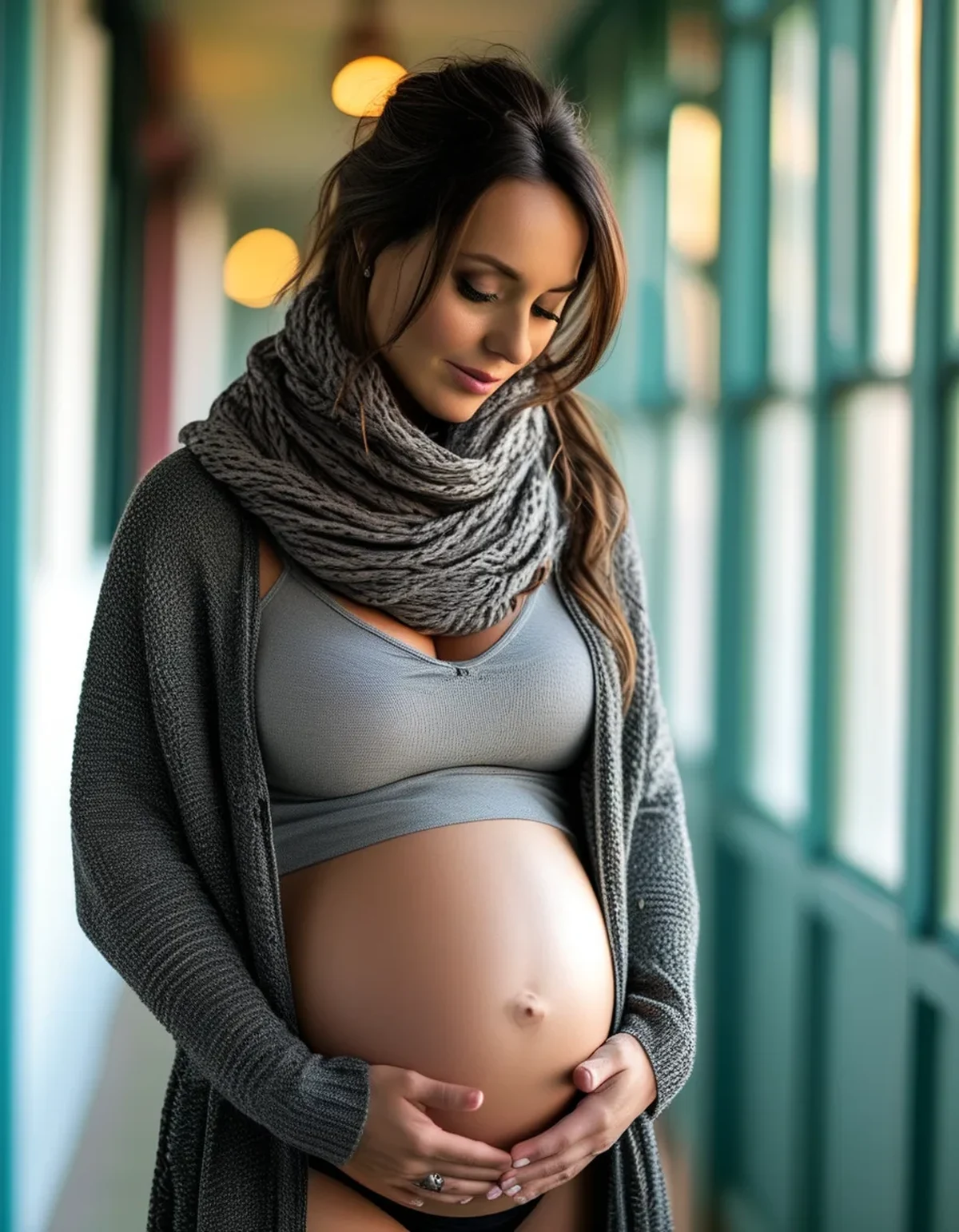
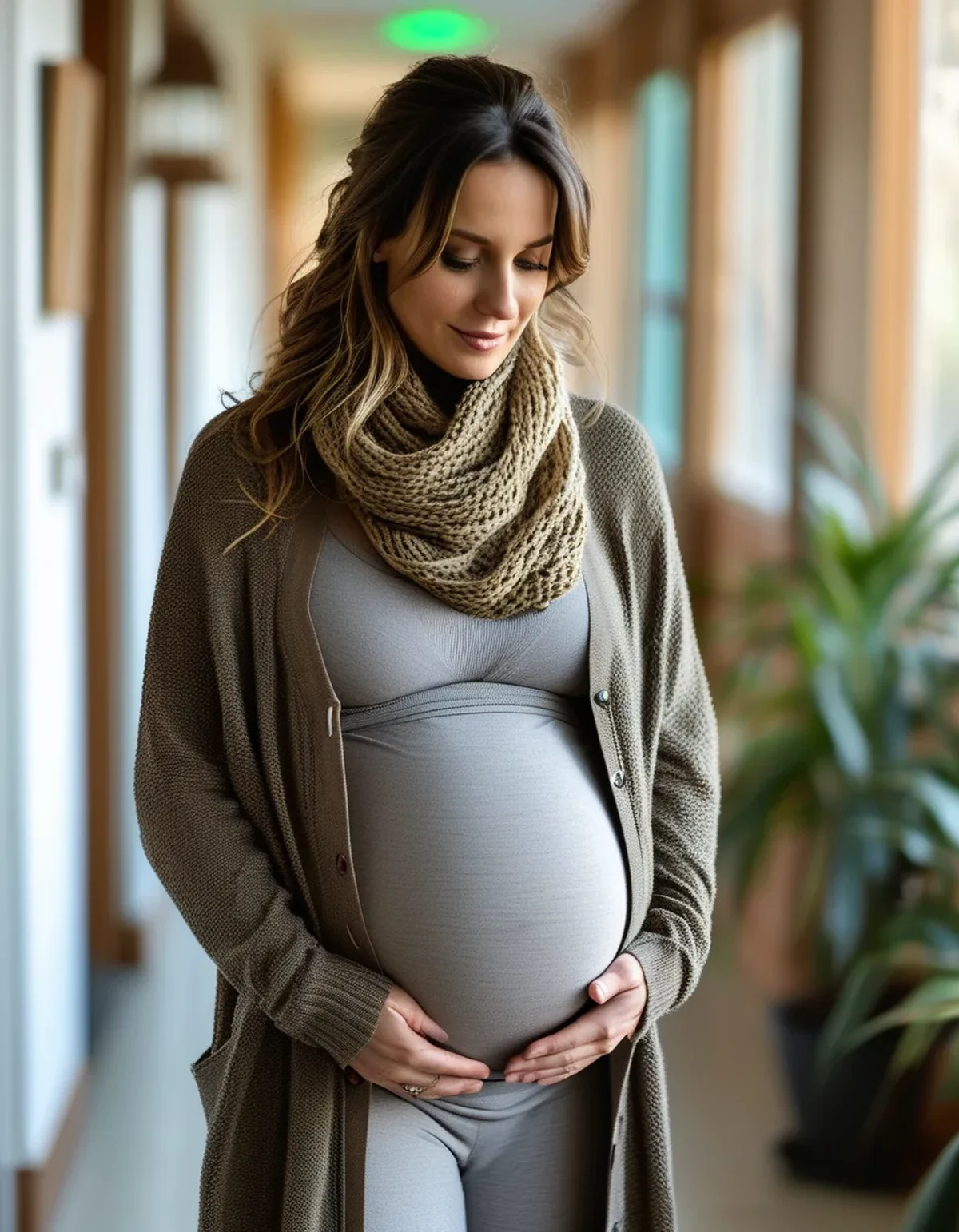
Mid layer: something that opens. An open cardigan, a wrap top, a zip-through. This is the key piece - it lets you go from fully closed to fully open across a temperature range without taking anything off in a car park.
Outer layer: a coat that accommodates the bump and opens easily. A wrap coat, a cape, or a coat one or two sizes up worn open. Maternity coat extenders - panels that zip into an existing coat - are worth knowing about and considerably cheaper than a new coat for a few months.
Extremities are where the actual warmth should go:
- Warm socks and proper shoes. Cold feet make you feel cold everywhere, and this is the most commonly neglected fix.
- Gloves, even when you feel too warm overall. Hands run cold independently.
- A large scarf. The most useful single item - warmth around the neck when you need it, off in seconds when you do not, and it doubles as a lap blanket.
Nothing tight around the middle. Restrictive waistbands are uncomfortable and can worsen reflux, which is already common in later pregnancy.
What is worth buying and what is not?
Very little, for a few months of wear, and the seasonal overlap matters.
Worth buying:
- Two or three good fitted base layers. These are worn constantly and under everything.
- One long open cardigan. The workhorse of a maternity autumn wardrobe.
- Maternity leggings or trousers with a proper over-bump band. The single most-worn item for most people.
- A coat solution - an extender panel, or a secondhand coat one or two sizes up.
- Good socks and comfortable shoes, especially as feet often swell and change size.
Not worth buying:
- A full maternity coat, unless you have a long cold stretch ahead and can find one secondhand. Coats are the most expensive maternity item and the least worn.
- Anything highly seasonal you will only wear for a few weeks.
- Multiple maternity dresses, unless your work requires them.
Borrow and buy secondhand where you can. Maternity clothes are worn for a short period and are frequently in excellent condition secondhand. Coats in particular are worth sourcing this way.
And buy for the season you will actually be in. If you are due in January, the autumn purchases are the ones that matter; if you are due in October, you need less than you think for the cold months.
Myth vs Fact: Dressing a Bump in Cold Weather
Myth: You need a full maternity wardrobe for each season. Fact: A handful of well-chosen basics plus non-maternity pieces in a larger size covers most of it. Long cardigans, wrap tops, and stretchy dresses are frequently wearable without being maternity-specific, and are wearable afterward too.
Myth: You will be cold all the time because you are more sensitive. Fact: The opposite is more common. Increased blood volume and metabolic rate mean many people run warm through pregnancy, and overheating indoors is a more frequent complaint than being cold.
Myth: A heavier coat is the answer for cold weather. Fact: A heavy coat you cannot fasten and cannot regulate is worse than a lighter one worn open over layers. Adjustability beats insulation when your temperature is variable.
Myth: Bump bands and support belts are just for comfort. Fact: Many people find support garments genuinely helpful for back and pelvic discomfort in later pregnancy. If you have pelvic girdle pain, ask your midwife or a physiotherapist about appropriate support rather than choosing one at random.
Myth: You should size up in everything. Fact: Sizing up in non-maternity clothes gives you a garment that is too wide everywhere but still too short at the front, since the bump pulls the hem up. A proper over-bump panel solves the length problem that sizing up does not - which is the point most people discover only after buying several sizes too big.
If you have any concerns about swelling, particularly sudden swelling in the hands or face, or severe headaches, contact your midwife or doctor promptly. This is general information, not medical advice.
FAQ: Maternity Layering, Answered
When do I need maternity clothes?
Hugely variable - commonly somewhere in the second trimester, but earlier or later is entirely normal. Trousers are usually the first thing needed.
Can I wear my normal coat?
Often yes, worn open over layers, or with an extender panel. Many people never buy a maternity coat and manage fine, especially outside the coldest months.
Why do my feet feel cold when I am overheating?
Circulation changes and the fact that heat is being carried to the core and torso. Warm socks and proper shoes address it directly, and it is worth doing even when you feel too warm overall.
Will my shoe size change?
Feet commonly swell in pregnancy and some people find their size increases, sometimes permanently. Avoid buying expensive shoes in the later months.
What about after the birth?
Most of these pieces still work - open cardigans, fitted base layers, and stretchy trousers are all useful postpartum, and layers that open are convenient if you are feeding.
TL;DR:
- Pregnancy often means running warm overall while hands, feet, and the bump feel cold
- Choose layers that open - a long cardigan, a wrap coat, a scarf - over layers you have to remove
- Put the real warmth in the extremities: socks, shoes, gloves
- Nothing tight around the middle, and a proper over-bump band rather than sizing up
- Borrow or buy secondhand for coats, which are the least worn and most expensive item
The standard autumn layering advice assumes a body that gets uniformly cold and warms up uniformly. Pregnancy does not work that way, and dressing for fine-grained adjustment rather than for maximum insulation makes the whole season considerably more comfortable.
See It in Motion
Seen here: Maternity Capris with Side Pockets — shop it on bubblelime.com
Keep Reading
This article is for general informational and styling purposes only. Fit, sizing, and product availability may vary.