Do Maternity Jeans Belly Panels Actually Stretch Out Over a Pregnancy?
Quick Answer: Belly panel longevity depends mainly on the elastane percentage and knit density of the panel fabric — panels with at least 20% elastane and a tighter knit hold recovery and support through a full pregnancy noticeably better than thinner, lower-elastane panels, which can start to sag or lose elasticity by the third trimester.
A belly panel that fits perfectly at 14 weeks doesn’t automatically mean it’ll still support and fit well at 36 weeks — panel quality varies more than most first-time maternity shoppers expect.
What fabric spec actually predicts whether a panel will hold up?
A belly panel with at least 20% elastane content, combined with a tighter, denser knit construction rather than a thin, sheer jersey, tends to maintain both stretch recovery and support through a full pregnancy, while lower-elastane, looser-knit panels are more prone to sagging or losing shape by the later trimesters.
Why does a panel that fits well early sometimes fail by the third trimester?
Repeated daily stretching over months gradually fatigues elastane fibers, and lower-quality panels reach that fatigue point sooner, which is why a panel that felt perfectly supportive at 16 weeks can feel loose or under-supportive by 32-36 weeks even though the jeans technically still fit.

Is there a way to extend a panel’s usable life through a pregnancy?
Rotating between at least two pairs of maternity jeans, rather than wearing one pair daily, reduces the cumulative stretch fatigue on any single panel, giving elastane fibers time to recover between wears rather than being under constant tension, which meaningfully extends how long support holds up.
Myth vs Fact: Maternity Jeans Belly Panels
Myth: All belly panels are built to the same stretch standard regardless of price. Fact: Elastane percentage and knit density vary significantly between brands and price points, directly affecting how well a panel holds up over nine months.
Myth: A panel that fits well in early pregnancy will definitely still fit the same way later. Fact: Elastane fatigues with repeated stretching, so a panel that fit well early can lose support by the third trimester, especially with heavy daily wear.
FAQ: Maternity Jeans Belly Panels, Answered
How can I check elastane percentage before buying?
Most maternity jeans list fabric composition, including the panel fabric specifically, on the product page or tag — looking for panels around 20% or higher elastane is a reasonable benchmark.
Does washing frequency affect how quickly a panel wears out?
Yes — frequent hot washing and machine drying can accelerate elastane breakdown, so washing in cold water and air-drying maternity jeans when possible helps preserve panel elasticity longer.
Is it worth buying a second pair of maternity jeans partway through pregnancy if the first pair’s panel is wearing out?
Many people do exactly this, especially moving into the third trimester, since a fresh panel with full elasticity provides noticeably better support than a fatigued one from months of daily wear.
TL;DR:
- Panels with at least 20% elastane and a tighter knit hold support better through a full pregnancy
- Elastane fatigues with repeated daily stretching, which is why panels can loosen by the third trimester
- Rotating between two pairs reduces cumulative stretch fatigue on any single panel
- Cold washing and air-drying help preserve panel elasticity longer than hot washing and machine drying
Checking panel fabric composition before buying helps set realistic expectations for how long support will actually last.
See It in Motion
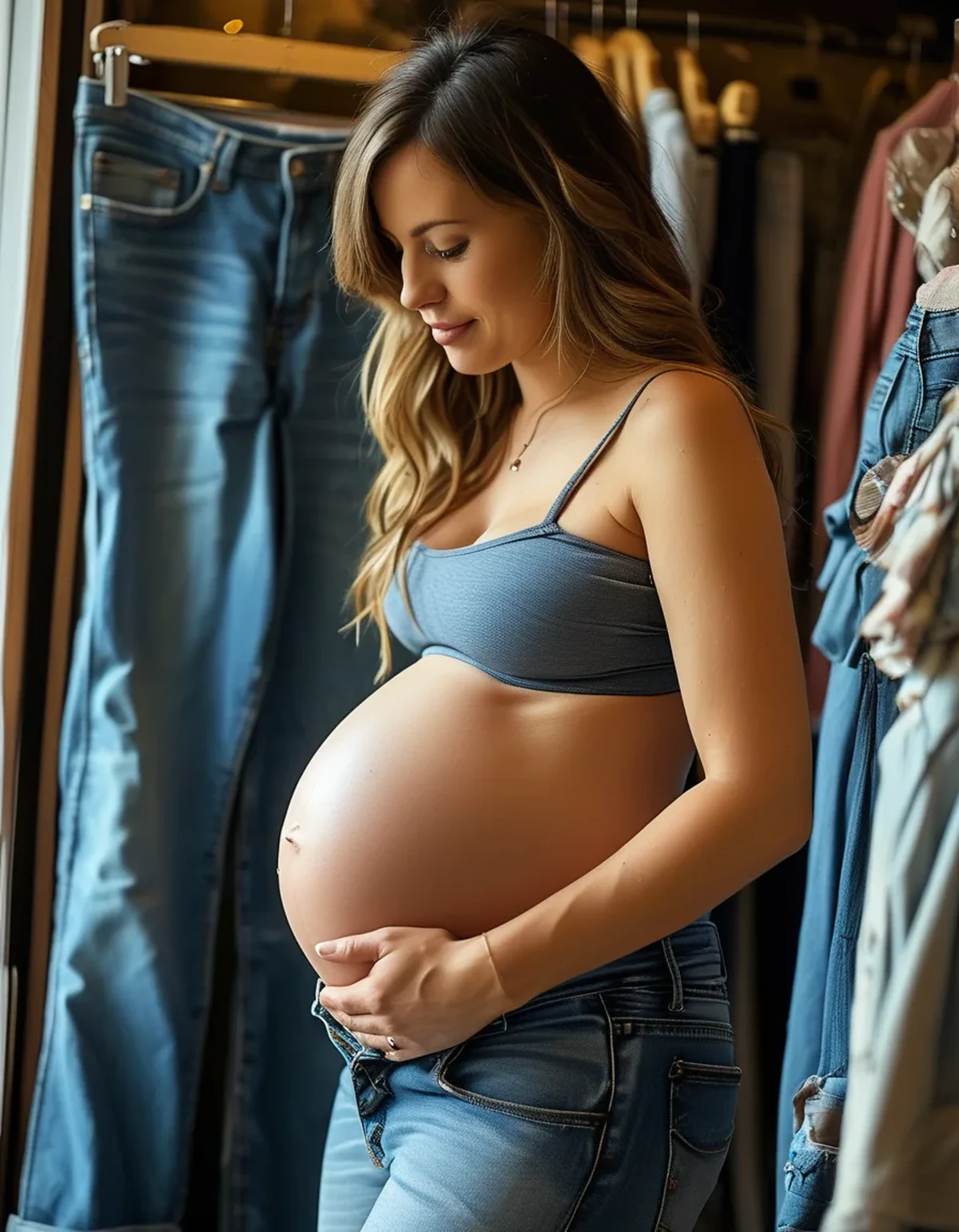
Seen here: Maternity Capris with Side Pockets — shop it on bubblelime.com
Keep Reading
This article is for general informational and styling purposes only. Fit, sizing, and product availability may vary.