The Maternity Shopping Strategy Built Around Return Policies, Not Just Sizing
Most maternity shopping advice focuses entirely on sizing and trimester-specific pieces, and skips over a detail that matters just as much given how fast the body changes during pregnancy — the actual return policy behind each purchase. A garment that fits perfectly at the fitting stage can be wrong within weeks, which makes return flexibility a real strategic factor, not an afterthought. Here is why a return-policy-first approach makes sense for maternity shopping specifically, and how to actually shop this way.

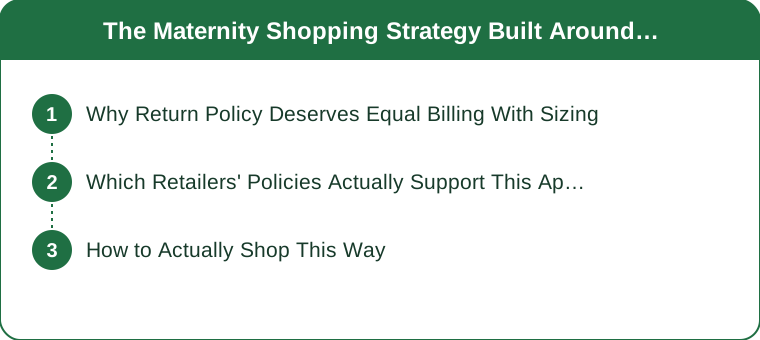
Why Return Policy Deserves Equal Billing With Sizing
The specific reasoning: the the-body-changes-faster-than-a-typical-return-window (the standard thirty-day return windows common at many retailers being genuinely too short relative to how much the body can change over the course of a single trimester — the standard-windows-were-designed-for-a-stable-body-not-a-changing-one), the the-uncertainty-about-final-size-is-higher-than-normal-clothing-shopping (the pregnancy body changes carrying more individual unpredictability than typical clothing sizing, meaning even careful research doesn’t fully eliminate a wrong-size risk the way it might for non-maternity shopping — the higher-uncertainty-justifies-more-return-flexibility-upfront), the the-buying-ahead-of-need-is-common-and-increases-return-risk (the common strategy of buying a piece slightly ahead of the trimester it’s meant for, per the second-trimester-wardrobe-shift-guide logic, inherently increasing the chance sizing needs will have shifted by the time it’s actually worn — the buying-ahead-trades-convenience-for-return-risk), the the-tags-often-need-to-stay-on-for-testing-across-days (the needing to try a piece across multiple days or even body-fluctuation points before being confident in the fit, which conflicts with policies requiring tags attached or unworn condition — the fit-testing-needs-time-policies-dont-always-allow), the the-cost-per-wear-calculation-is-especially-sensitive-in-maternity (the maternity pieces often being worn for a genuinely short window, making a wrong or wasted purchase a proportionally bigger loss than the same mistake in regular wardrobe shopping, from the maternity-clothes-exit-strategy-guide logic — the a-wrong-purchase-costs-more-relatively-in-a-short-use-window), and the reframe (the return policy as a real strategic variable worth checking before purchase, not a boring fine-print detail to deal with only if something goes wrong).

Which Retailers’ Policies Actually Support This Approach
What to look for specifically: the extended-return-windows-beyond-the-standard-thirty-days (the retailers offering forty-five, sixty, or even longer windows being meaningfully better suited to the pace of pregnancy body change than standard policies — the longer-windows-directly-address-the-core-problem), the the-maternity-specific-return-policies-some-retailers-offer (the some retailers running maternity-specific return or exchange policies distinct from their general policy, worth specifically checking for rather than assuming the general policy applies — the check-for-a-maternity-specific-policy-not-just-the-general-one), the the-tags-on-but-tried-on-allowances (the policies explicitly allowing try-on and light wear for fit assessment, rather than requiring pristine unworn condition, being especially valuable for this category — the try-on-friendly-policies-matter-more-here-than-in-regular-shopping), the the-free-return-shipping-reduces-the-friction-cost-of-being-wrong (the free return shipping meaningfully lowering the practical cost of ordering a size or style that turns out wrong, encouraging the appropriate amount of experimentation — the free-shipping-makes-trial-and-error-actually-viable), the the-exchange-flexibility-for-a-different-size-as-the-body-changes (the retailers allowing an easy exchange to a different size rather than only a refund being particularly useful given that the need is often still there, just at a different size — the exchange-not-just-refund-solves-the-actual-need), and the frame (the ideal retailer profile as extended return windows, maternity-specific policies where available, try-on-friendly conditions, free return shipping, and easy size exchanges — a genuinely different checklist than what matters for typical non-maternity clothing shopping).
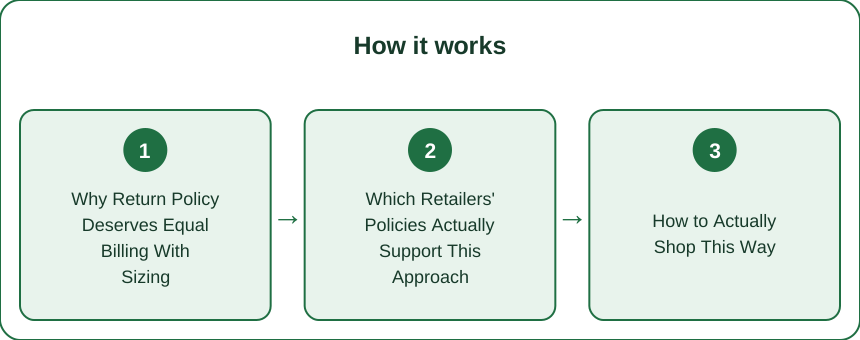
How to Actually Shop This Way
The practical strategy: the check-the-return-policy-before-adding-to-cart-not-after-a-problem (the making return policy review a standard part of the shopping decision itself, not a step only taken after something already doesn’t fit — the build-the-check-into-the-shopping-habit-not-the-troubleshooting-habit), the the-keep-tags-and-packaging-until-fit-is-fully-confirmed (the holding onto original tags and packaging for the entire return window even after a piece seems to fit, since fit can still shift within that window — the dont-discard-return-eligibility-prematurely), the the-buy-from-fewer-retailers-with-better-policies-rather-than-spreading-purchases-widely (the concentrating purchases with a smaller number of retailers known for strong return flexibility, rather than spreading maternity purchases across many different stores with inconsistent policies — the concentrate-purchases-with-return-friendly-retailers), the the-time-purchases-near-the-start-of-a-generous-return-window-relative-to-expected-use (the buying a piece close to when it’s actually needed rather than far ahead, when the retailer’s return window is on the shorter side, to keep the window still open during the actual wear period — the align-purchase-timing-to-the-return-window-length), the the-track-return-deadlines-actively-rather-than-relying-on-memory (the a simple note or reminder for each purchase’s return deadline, given how easy it is to lose track amid other pregnancy planning — the actively-track-deadlines-dont-rely-on-remembering), and the frame (the practical strategy as checking return policy before buying, preserving return eligibility until fit is fully confirmed, concentrating purchases with return-friendly retailers, timing purchases relative to the return window length, and actively tracking deadlines — treating return flexibility as a core part of the maternity shopping plan rather than a backup plan for when something goes wrong).
Maternity shopping deserves a return-policy-first strategy because the body changes faster than a standard thirty-day return window was ever designed to accommodate, sizing uncertainty runs higher than typical clothing shopping even with careful research, and the common strategy of buying slightly ahead of need increases the odds that fit will have shifted by the time a piece is actually worn. The retailers worth prioritizing offer extended return windows beyond the standard thirty days, sometimes a maternity-specific policy distinct from their general one, try-on-friendly conditions rather than requiring pristine unworn items, free return shipping to lower the cost of experimentation, and easy exchanges to a different size rather than only a refund. Shopping this way in practice means checking the return policy before adding anything to cart rather than only after a problem appears, holding onto tags and packaging until fit is fully confirmed rather than prematurely, concentrating purchases with a smaller number of return-friendly retailers, timing purchases relative to how long the return window actually is, and actively tracking return deadlines rather than relying on memory.
See It in Motion
Seen here: Maternity Capris with Side Pockets — shop it on bubblelime.com
Keep Reading
This article is for general informational and styling purposes only. Fit, sizing, and product availability may vary.