Dressing a Bump When Mornings Are Cold and Afternoons Are Not
Quick Answer: Pregnancy raises resting metabolic rate and blood volume, so you run warmer than everyone around you - which means the transitional season needs more layers you can remove and fewer you cannot. An open front layer over a stretchy base, in breathable natural fibers, handles a 20-degree swing without a single garment change that requires a bathroom.
The cold-morning warm-afternoon problem is annoying for everyone. When you are pregnant, running several degrees warmer than the room, and unable to easily change clothes in the middle of the day, it becomes the defining wardrobe problem of the season.
Why do you run so much warmer?
Several changes stack, and they are all normal.
Blood volume increases substantially during pregnancy - by roughly 40-50% by late pregnancy - which means more warm blood circulating close to the skin. That is why hands and feet often feel hot and why the flush is genuinely visible.
Resting metabolic rate rises. You are generating more heat around the clock, not just when moving.
Progesterone raises basal body temperature slightly, an effect that persists through pregnancy.
The practical result is that a room everyone else finds comfortable frequently feels overheated, and a jacket that would be right for the temperature is often two layers too many.
It also means the swing you experience is larger than the swing outside. In a cold morning you may feel appropriately cold; by afternoon, when everyone else is comfortable, you are overheating. Dressing for the average is a worse strategy in pregnancy than it is otherwise - which is why the whole approach has to be built around removal.
What is the layering structure that works?
Three pieces, with a specific requirement for each.
Base: stretchy, breathable, and long enough. A ribbed cotton or modal top with enough length to stay over the bump when you raise your arms. Natural fibers and blends breathe better than pure synthetics, which matters more when you are running warm.
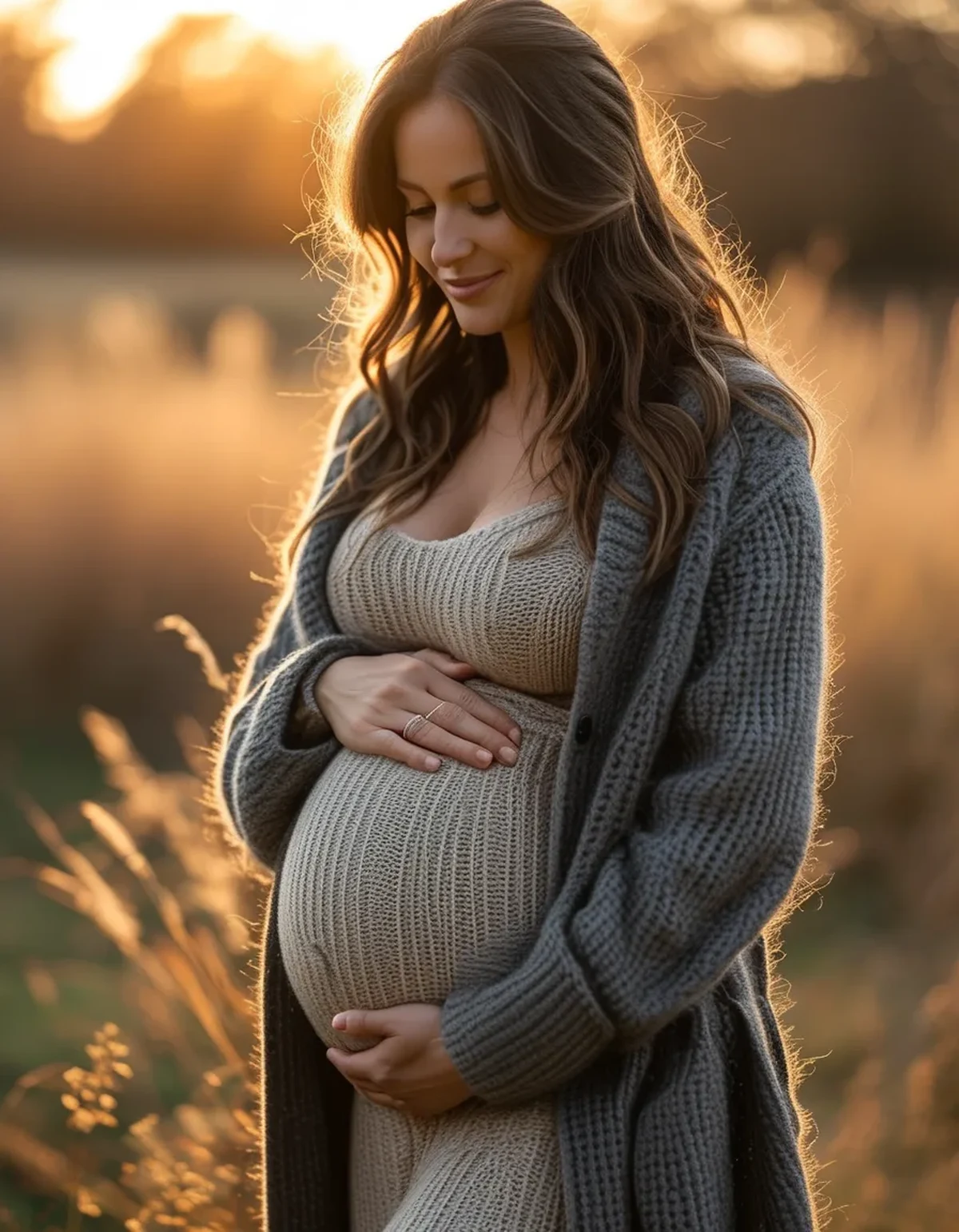
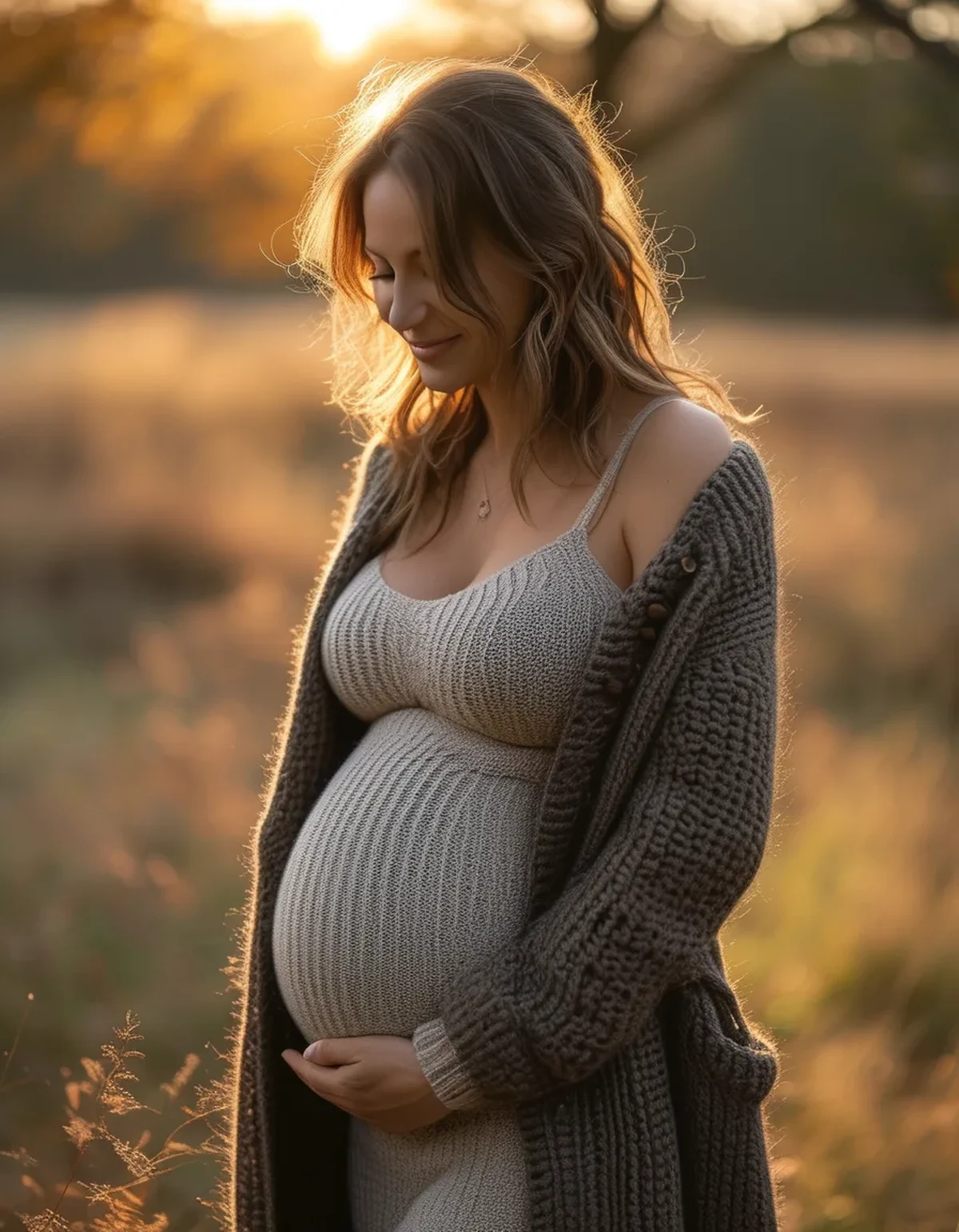
Mid: an open front layer. A cardigan, a duster, or an open shirt. Open-front is the crucial specification - it comes off without going over your head, it can be worn half-on, and it accommodates a changing shape without needing to fit.
Outer: something that closes but does not need to. A coat that works open is far more useful than one that only works closed. Many people simply size up in a regular coat rather than buying maternity outerwear for one season, and an oversized or wrap style works better than a fitted one.
Accessory that does disproportionate work: a large scarf. It adds warmth without adding a layer around the torso, comes off in one motion, and is one of the few things that still fits perfectly throughout.
The underlying principle: every layer should come off without lifting anything over your head. That single rule solves most of the practical difficulty.
What Nobody Tells You About Dressing a Bump in Transitional Weather
You will be cold in the extremities and hot in the core simultaneously. Circulation changes mean cold feet and hands alongside an overheated torso. The answer is warm socks and a lighter top layer - not a warmer coat.
Your feet may have changed size. Swelling and hormonal ligament laxity can increase foot size, sometimes permanently. Buying autumn boots in your usual size in the third trimester is frequently a mistake - go later in the day when swelling is greatest, and consider a half size up.
Fabric matters far more than usual. Synthetics that were fine before can feel unbearable when you are running warm. Cotton, modal, bamboo, and merino all handle heat and moisture better than polyester.
Waistbands are the whole game. Over-the-bump panels are warmer and more supportive; under-bump is cooler and often more comfortable in the transitional weeks. Many people want both for different days, and it is worth having one of each rather than two of one.
Buy for the season, not the size. Maternity clothes are worn for a short window. Two or three excellent transitional pieces used constantly beat a full wardrobe worn twice each.
Non-maternity pieces do a lot of work. Oversized knits, open cardigans, wrap dresses, and stretchy skirts often work throughout without being maternity at all - and keep working afterward.
What specific pieces are worth buying?
A short list, chosen for how many days each one covers.
One over-bump legging in a heavier fabric. Wears with everything, works from now through winter, and is the single most-worn maternity item most people own.
Two long stretchy tops with enough length. These are the base of nearly every outfit and get washed constantly, so two is the minimum.
One open-front cardigan or duster in a mid-weight knit. The workhorse of the entire transitional season.
One dress that works with tights or bare legs. A stretchy or wrap style extends the range of a single garment across a large temperature span.
A large scarf.
That is five items, most of which are usable well after pregnancy. Add borrowed or secondhand pieces for anything else - the wear window is short enough that buying new for everything rarely makes sense.
And a practical note: check comfort while seated, not standing. A waistband that is fine standing in a fitting room can be uncomfortable after twenty minutes at a desk, which is where most of the day happens.
FAQ: Maternity Transitional Dressing, Answered
Do I need a maternity coat?
Usually not for one transitional season. An oversized, wrap, or unfastened regular coat covers most of it. For deep winter in a cold climate late in pregnancy, a maternity coat or a coat extender panel is worth considering.
Over-bump or under-bump waistbands?
Personal preference, and many people switch as pregnancy progresses. Over-bump gives more support and warmth; under-bump runs cooler and suits the transitional weeks for many. Having one of each covers the range.
How do I stop overheating in meetings and other places I cannot change?
A breathable base layer, an open-front mid layer you can remove without ceremony, and a water bottle. Layer choice is the fix - fabric and removability do more than anything else available to you.
TL;DR:
- Higher blood volume and metabolic rate mean you run warmer, so build the outfit around removal rather than insulation.
- Use a stretchy breathable base, an open-front mid layer, and an outer that works unfastened.
- Natural fibers beat synthetics when you are running hot, and a large scarf adds warmth without adding a torso layer.
- Five pieces cover the season - and shop for boots later in the day, a half size up.
The transitional season is short and the wardrobe for it should be too. A handful of removable, breathable pieces, and the 20-degree swing stops being a daily negotiation.
See It in Motion
Seen here: Maternity Capris with Side Pockets — shop it on bubblelime.com
Keep Reading
This article is for general informational and styling purposes only. Fit, sizing, and product availability may vary.